We help IT replace manual provisioning of access request tickets and employee onboarding checklists for Google Workspace groups and Okta apps with automated, least privilege, audit-ready policy-based access control.


How we fit
How many access request tickets have you submitted to IT or Security? Why don't they know what you should have access to?
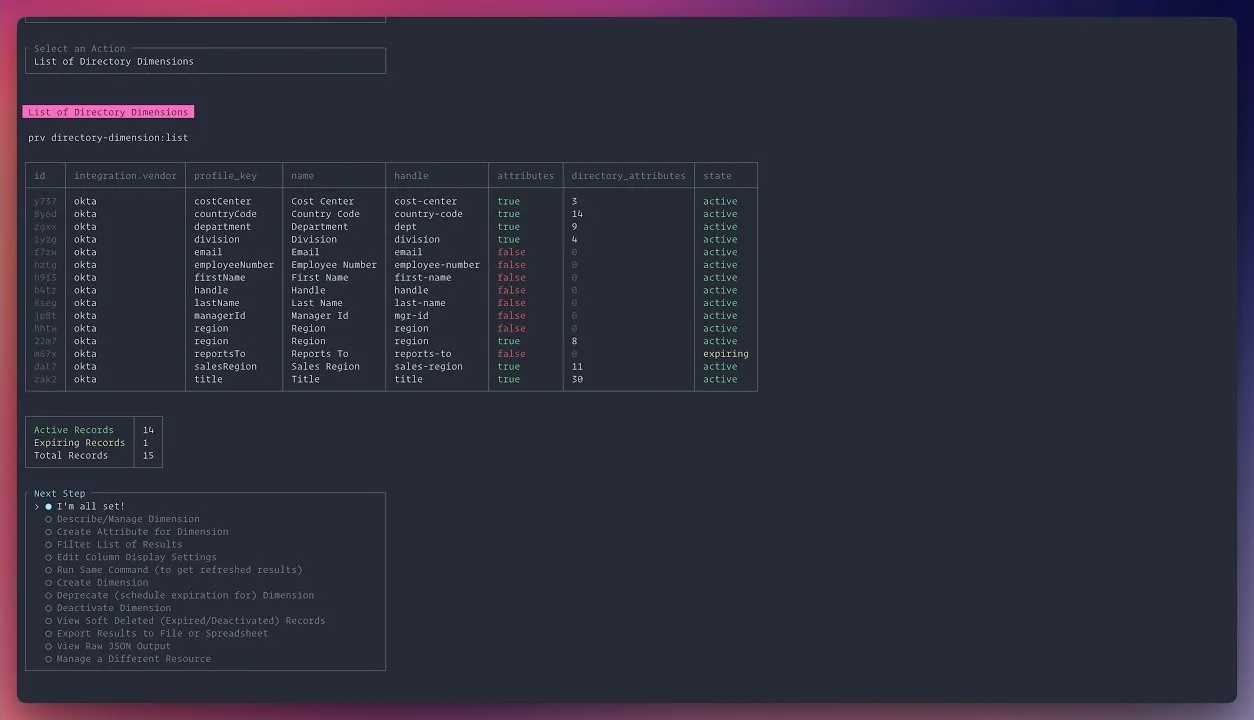
Provisionr is back office software for Identity Governance, IT, and Security teams using Google Workspace or Okta with 100 to 20,000 users. We focus on group membership policies that grant access across most resources in Google and all of your SSO applications in Okta. Our directory adds the granular user profile attributes and metadata that your HRIS and IdP lack. Our policy engine reduces access request tickets and automates provisioning and deprovisioning for onboarding and job role changes, ensuring least privilege access to applications, data, and systems for employees, contractors, and third-party collaborators.
We are a team of auditors, IT/TechOps sysadmins, Identity Governance, and Security engineers that built the platform we wish existed.
Microsoft Entra already serves Active Directory environments well, with mature identity governance built in for the organizations that live in that world. Identity governance did not stop at Active Directory, though. The 9+ million Google Workspace organizations and 18,000+ Okta customers running modern identity stacks were largely left to fend for themselves.
We are not for everyone, and we would rather say so up front. If you need a sprawling enterprise governance suite spanning hundreds of integrations and you have the Identity Governance headcount and the $50k to $300k a year budget to run it, the big platforms exist for good reason. We are for the organizations in between, using Google Workspace or Okta, who outgrew the scripts and most of their access is federated through Google or Okta.
The Problem We Solve
Manual provisioning does not fail loudly. It fails slowly, an hour at a time, until a real share of the IT team's week is spent moving people in and out of groups by hand. Checklists drift out of date. String-matching rules break the moment a team gets renamed. The work scales with headcount, so it only ever gets heavier.
The patterns we hear on every customer call
Identity data is scattered across four systems
The access request queue is the process
The Okta group rules nobody understands
External partner access governed by Slack DMs
New hires lose their week to IT tickets
Post-termination access that never gets revoked
Access reviews are a burden on the reviewers
Answering "what could this account do?" takes hours
Do these pain points sound familiar?
Deeper essays on why traditional access management is broken. Here's why manual
processes, periodic reviews, and disconnected systems create risk and inefficiency.
Drowning in a Flood of Access Requests?
The Baseline Entitlements Spreadsheet
Hidden Costs of Employee Role Changes
Why Sales Team Structure Breaks Access Automation
When IdP Group Rules Become Unmanageable
HRIS Lacks the Granularity Teams Actually Need
Identity Governance Forgot About the IT Admin
The evolution of the solution
Policy-based automation replaces manual processes with declarative rules.
Access is derived from attributes, not accumulated through requests.
Access Reviews Have Become Audit Theater
The RBAC Drift Problem Nobody Plans For
Cross-System Access Is Where It Breaks Down
Why Policy-First Beats System-by-System
The Vision of Fully Automated Provisioning
Making Exceptions First-Class, Not Forgotten
Preserving Access During Graceful Role Changes
Continuous Compliance vs. Quarterly Reviews
Our Vision for Your Organization
Here is what we think a healthy access program looks like, stated plainly. Provisioning measured in minutes, not days. New people productive on their first morning. Access that changes when the person does. None of this is exotic. It is what you get when policy, rather than a ticket queue, is the source of truth.